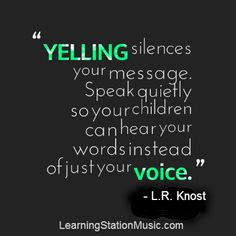
This is a great quote. A wonderful reminder for all of us as parents to control our tone. It’s so easy to get frustrated and yell at our children. Let’s work together to calm down BEFORE we speak to ensure our children are hearing our words!
Big deal. Little deal. Know the difference.
This is a great quote. A wonderful reminder for all of us as parents to control our tone. It’s so easy to get frustrated and yell at our children. Let’s work together to calm down BEFORE we speak to ensure our children are hearing our words!
Dear Dr. D.: Sibling rivalry is at an all-time high in my home. The hitting, biting and yelling is constant. How can I encourage love among my kids and not frustration?
I am getting ready to coach myself as I address this situation. The term sibling rivalry establishes a winner and a loser. I don’t promote this because in a family unit, if one person loses, the whole family all loses. Instead, I encourage teaching sibling negotiations. The ultimate way to teach this begins with how parents handle disagreements with one another or with other adults in the child’s life. I often tell my children, “You don’t have to argue if you know you are right.” It’s not very effective if/when I argue with my husband over something small and minute (ouch…that hurts!). However, the reality is…children learn by observation as well as illustration. It is truly a do as I do, not as I say situation.
Here are my recommendations:
Set immediate rules. First, no yelling at one another or in the house, only when there is danger. Second, no child is to hit, bite, scratch or physically assault one another. Be clear with your children that the only time they can put a hand on the other sibling is with permission from the other sibling and only in play or showing affection. Be ready to reinforce this rule with immediate consequences.
When there is an argument, separate the children. Place them in separate locations in the home and implement a talking time-out, which means not only can they not be around one another (separate rooms) but they also cannot talk to each other because they were using their words irresponsibly.
Be clear, immediate about consequences/rewards. Plan in advance what privileges your child will lose because of his/her behavior (no video games, not TV, etc.). To control your yelling, have a spray bottle of cold water handy to spray the children to get there attention and hopefully make them laugh or at least forget how upset they may be at one another. For rewards, create a point system, so when they are caught demonstrating good behavior, they can “purchase” an experience like a trip to the movies or a special dessert.
With a little practice, sibling negotiations can become a permanent part of your family dynamics.
Enjoy the parenting journey…
Have a question for Dr. D.? Please email me at drdtheparenttrainer@msn.com. Your name will remain confidential.
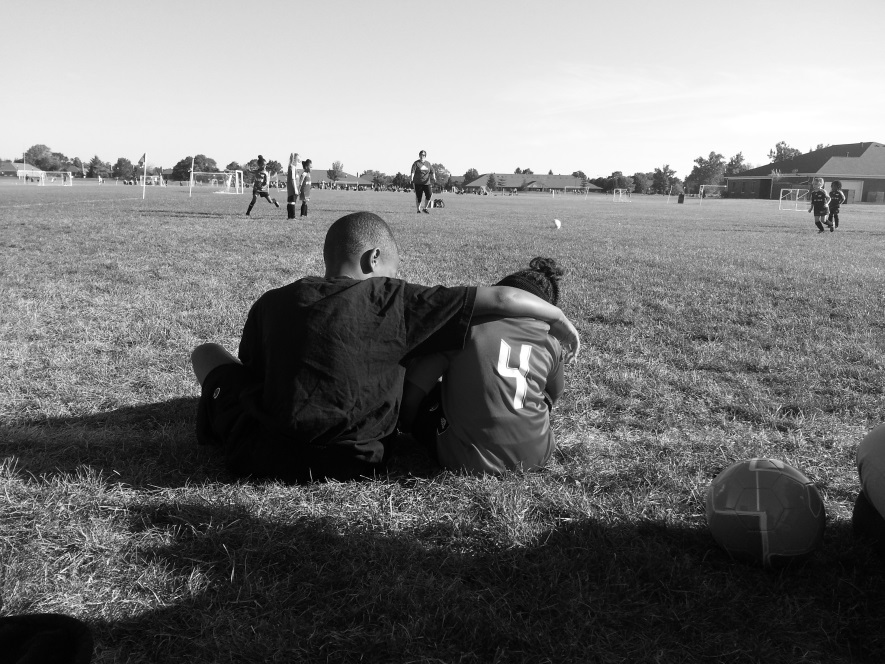
Rivalry is allowed and can destroy family balance
Negotiation skills are taught and can bring family balance
Allowing is easy…you sit back and watch – everyone can suffer
Teaching is necessary…you take a moment, teach or rehearse a lesson…
Everyone benefits!

“It takes a village” is borrowed from an African proverb that embraces the concept of a community of adults accepting the responsibility of nurturing a child. This is accomplished by combining their time, talents, resources and prayers. These individuals are intertwined because of the shared desire to assist in a child’s healthy physical, mental and spiritual maturity. There is an understanding and acceptance of the value of a child – that the healthier and safe a child is…the healthier and safe our future will be.
Therefore, one of the many responsibilities of a great parent is to ensure that your family’s “village” is comprised of people that share the same goals as you do for your child. So, I challenge you this week to consider your “village people”…who are they and can they stand in the gap for you? Do they cherish your child as you do? Is your child’s well-being and safety paramount to them?
You may be surprised where you might find that next person to become part of your “village”…could be a neighbor, a classmate’s parent, a teacher, a co- worker, who knows…maybe even consider the people that are already in your life in a different manner. Include people such as teachers, physicians, extended family and many others.


 Dr. D. The Parent Trainer